Home / Commercial / Commercial ice machine repair
Commercial ice
machine repair
in the Bay Area
Ice machines are the most maintenance-sensitive equipment in a commercial kitchen, and Bay Area water is the reason. Every harvest cycle pushes hard water through an evaporator plate and a heated harvest circuit, and the mineral scale that leaves behind builds steadily until production drops, the ice clouds and the cycle times stretch out. The majority of ice machine calls we take are descaling and water system service, not failed components.
What we service
Commercial ice machine equipment we work on.
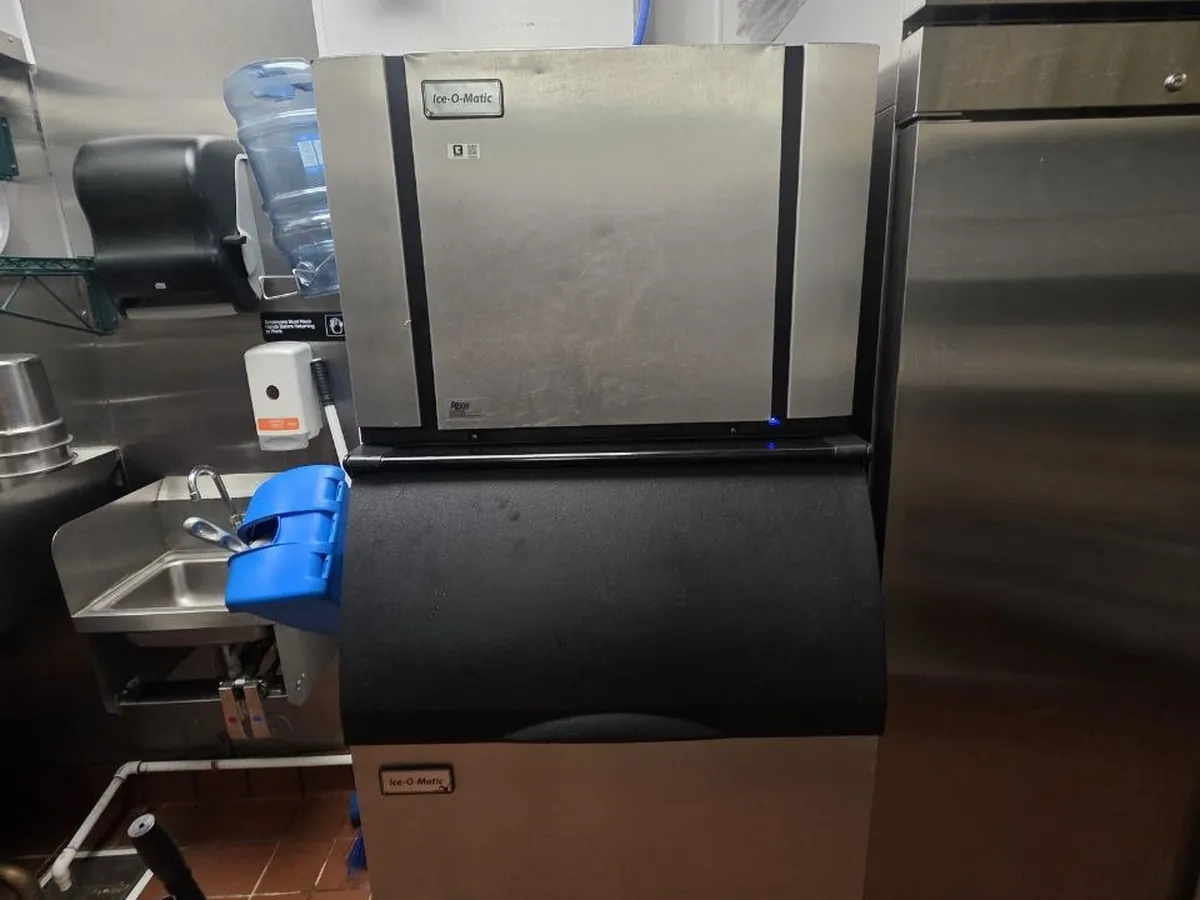
Modular head & bin systems
Head units on storage bins, the standard configuration in most restaurant and hotel kitchens, in cube, half-cube and full-cube formats.
- Full descale and evaporator plate service
- Harvest cycle and timing diagnosis
- Water inlet valve and pump repair
- Bin thermostat and level control faults
Undercounter & self-contained units
Compact units under the bar or on the line, where the condenser and the ice-making system share a very tight cavity.
- Condenser airflow and cleaning
- Water system descaling
- Drain and drain pump repair
- Compressor and sealed system diagnosis
Nugget, flake & specialty ice
Nugget, flake and gourmet clear ice equipment, which use different harvest mechanisms and wear differently from cube machines.
- Auger and gearbox service
- Extruder and bearing replacement
- Water distribution and float repair
- Clear ice cycle diagnosis
Water treatment, filtration & drainage
The part of an ice machine that determines how often you'll see us, and the part almost nobody specifies properly at install.
- Filter sizing, installation and replacement
- Scale inhibitor and treatment setup
- Drain line and air gap correction
- Water pressure and supply diagnosis
Common failures
What actually goes wrong.
Scale from hard water, ahead of everything else
Bay Area water leaves mineral deposits across the evaporator plate, water distribution tube and float system. Production falls off gradually, harvest cycles stretch, and the ice starts coming out cloudy and soft. It's the cause of most ice machine service calls in this area.
Condenser blocked and the unit overheating
Air-cooled machines sit in hot kitchens and pull dust and grease across the condenser. High head pressure means longer cycles, less ice, and eventually a safety cutout that owners read as the machine dying.
Water inlet valve or float failing
Too little water and the plate can't form full cubes; too much and it floods the trough. Both produce misshapen, hollow or partial ice long before the refrigeration side is at fault.
Drain blocked or draining uphill
Ice machines produce meltwater constantly. A blocked drain, a missing air gap or a line without proper fall backs water into the bin, which is a sanitation finding as well as a mechanical problem.
Harvest cycle failing and ice bridging in the plate
The plate never releases cleanly, ice welds itself across the cells, and production stops with a full evaporator. Usually a hot gas valve, harvest thermostat or a scaled plate surface.
Bin thermostat or level sensor stuck
The machine either runs into a full bin and jams, or stops making ice with the bin half empty. A cheap control that costs a kitchen a lot of ice before anyone diagnoses it.
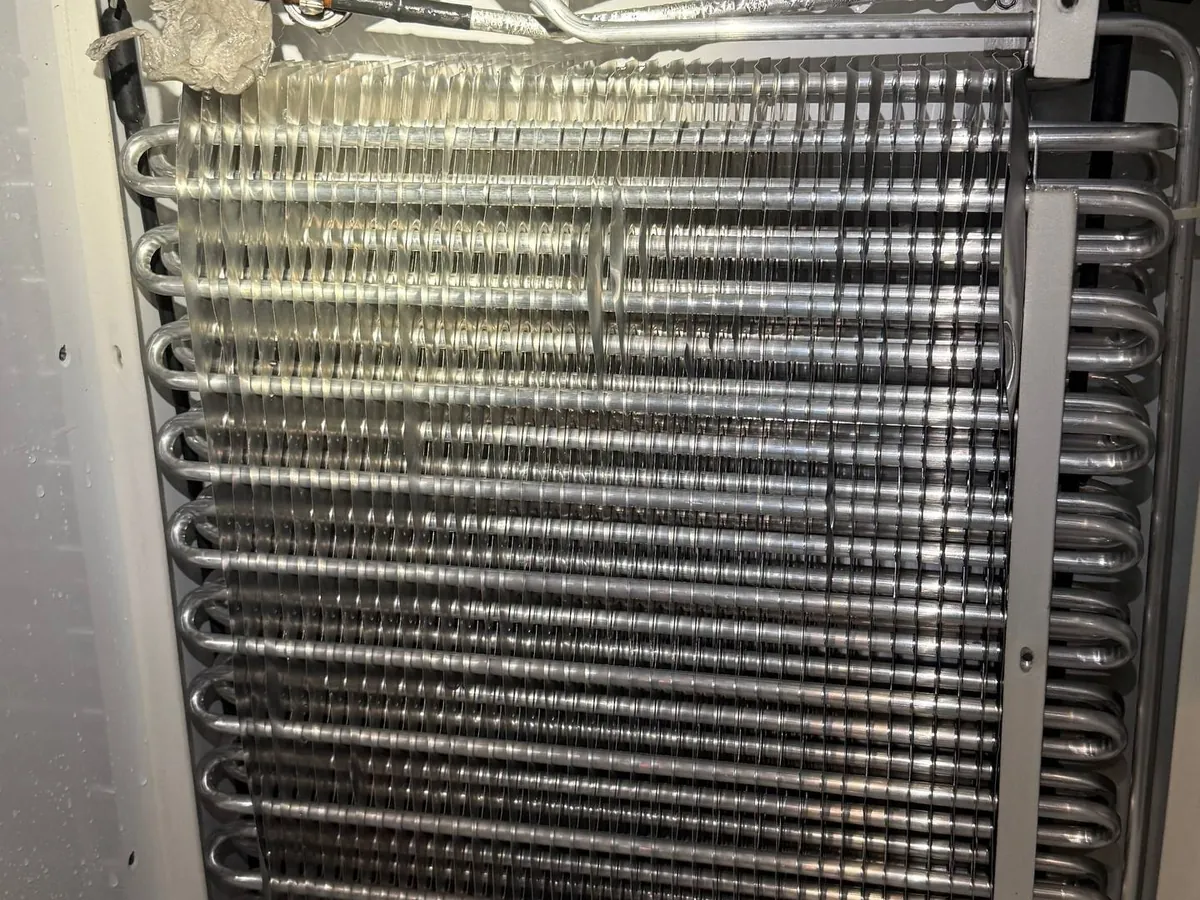
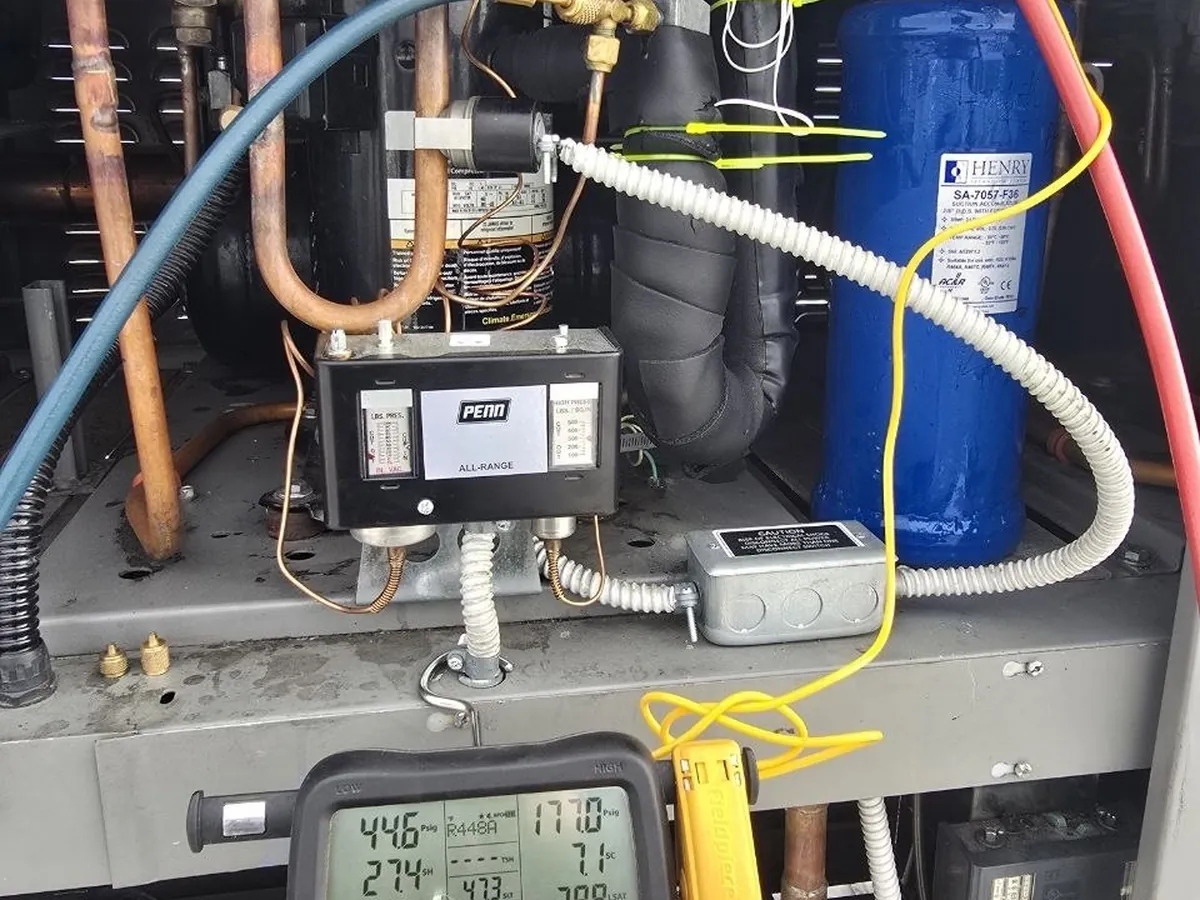
On the job
What we open up on an ice call.
How we work
What working with us looks like.
Treated as water equipment first
We inspect the water path, filter, pressure and drain on every visit, not just the refrigeration side. That's where the fault usually is, and skipping it is why some machines get repaired repeatedly for the same thing.
Sanitation done properly, not just descaling
Ice is food. A service includes cleaning and sanitising the food-contact surfaces to the manufacturer's procedure, and we document it — a health inspector may well ask when it was last done.
Filtration sized to the machine and the water
A filter that's undersized or overdue costs more in service calls than it ever saves. We check what's fitted, what it should be, and when it was last changed.
We tell you when it's a losing battle
An old machine on untreated water with a scaled plate can be nursed along for a while, but there's a point where a service contract on a new unit costs less than the repairs. We'll show you the arithmetic rather than keep billing.
Equipment and businesses we cover
Modular head and bin systems, undercounter and self-contained machines, cube, half-cube, full-cube, nugget, flake and gourmet clear ice equipment, remote condenser systems, water-cooled and air-cooled machines, ice dispensers and combination ice and water units. Restaurants, bars, hotels, cafes, healthcare and senior living facilities, schools, offices, breweries, grocery stores and event venues across the Bay Area.
Also commercial
The rest of the kitchen.
Condenser packed solid with flour, grease and dust · Door gaskets destroyed by daily use
See commercial refrigeration repair › Walk-in cooler & freezer repairIce building on the evaporator coil · Refrigerant leak dropping capacity gradually
See walk-in cooler & freezer repair › Commercial kitchen equipment repairIgniter, pilot or flame sensor stops holding · Oven drifting badly off its set temperature
See commercial kitchen equipment repair ›Service area
Commercial service across the Bay Area.
Same technicians, same warranty, same pricing rules, from San Francisco down to the South Bay and out to Marin.
Questions
Before you call.
My ice machine makes cloudy or hollow ice. Is it broken?
Usually not broken — scaled. Hard water deposits minerals across the evaporator plate and water distribution system, and the first symptom is ice that looks cloudy, comes out partial or feels soft. A full descale and water system service restores most machines in this state.
Production has dropped but the machine still runs. What's happening?
Two common causes: scale on the evaporator plate lengthening the freeze cycle, or a blocked condenser raising head pressure so the machine works harder for less ice. Both are service items rather than component failures, and both are correctable.
How often does a commercial ice machine need service?
Every six months in this area is a sensible baseline, and quarterly for high-volume machines or anywhere on untreated water. Deferring it is the most reliable way to turn routine maintenance into an emergency call during a busy weekend.
Do you clean and sanitise as well as repair?
Yes. Ice is a food product, and a proper service includes cleaning and sanitising the food-contact surfaces to the manufacturer's procedure, with documentation for your records.
There's water on the floor around the machine. Is that a leak?
Often it's the drain rather than a leak. Ice machines produce meltwater continuously, and a blocked line, a missing air gap or a drain without proper fall will back water into the bin and onto the floor. We check the drain path before looking for a leak.
Can you set up a maintenance contract for our ice machines?
Yes, and it's one of the easiest maintenance cases to justify. Scheduled descaling, filter changes and sanitation on a set interval costs a fraction of what emergency calls and lost ice cost across a year.
Book a technician
Get a technician out.
- ☎(628) 285-0504Fastest way to reach a dispatcher
- ✉info@volteight.comEstimates, invoices, commercial contracts
- ⌚Mon–Fri 8am–10pm · Sat–Sun 8am–5pmEmergency calls answered after hours
- ⌖San Francisco Bay AreaMarin, San Francisco, East Bay, Peninsula, South Bay