Home / Appliance repair / Coffee machine repair
Coffee machine repair
in the Bay Area
Built-in coffee machines fail for one reason more than all others combined, and it isn't a defect: Bay Area water is hard, and every shot pushes it through a heated brew group. Scale builds inside the boiler, the flow meter and the valves until pressure drops and the machine starts throwing errors. Most of what we do on these is genuine descaling and brew group service, not parts.
Symptoms
What we see most.
If any of this sounds like your unit, the diagnosis is usually straightforward and the repair is same-visit.
Coffee comes out weak or lukewarm
Scale in the boiler and thermoblock, or a brew group that's stopped compressing the puck properly. Rarely an electrical fault.
Descale warning won't clear
Either the cycle wasn't completed properly, or scale has built up past what a consumer descale can shift and the machine needs opening up.
Leaking water underneath
A perished seal on the brew group, a cracked water tank fitting or a split internal hose. Finding which one means opening the cabinet.
Grinder noisy or not grinding
Worn burrs, a jammed bean chute, or a foreign object in the grinder — a small stone in the beans is more common than people expect.
Milk system won't froth
Blocked milk lines or a clogged frother venturi. Almost always a cleaning problem rather than a failed part.
Brew group stuck or won't return home
The mechanical heart of the machine has jammed, usually from coffee residue or a failed drive gear. It needs stripping and servicing.
Error code on the display
These machines self-diagnose reasonably well. We read the code and confirm it against actual measurements rather than swapping parts on the code alone.
Pump loud but no water flow
A scaled or airlocked pump, or a blocked flow path. Running a scaled pump dry is what turns a service into a parts job.
What we service
Built-in, freestanding and plumbed — all serviced.
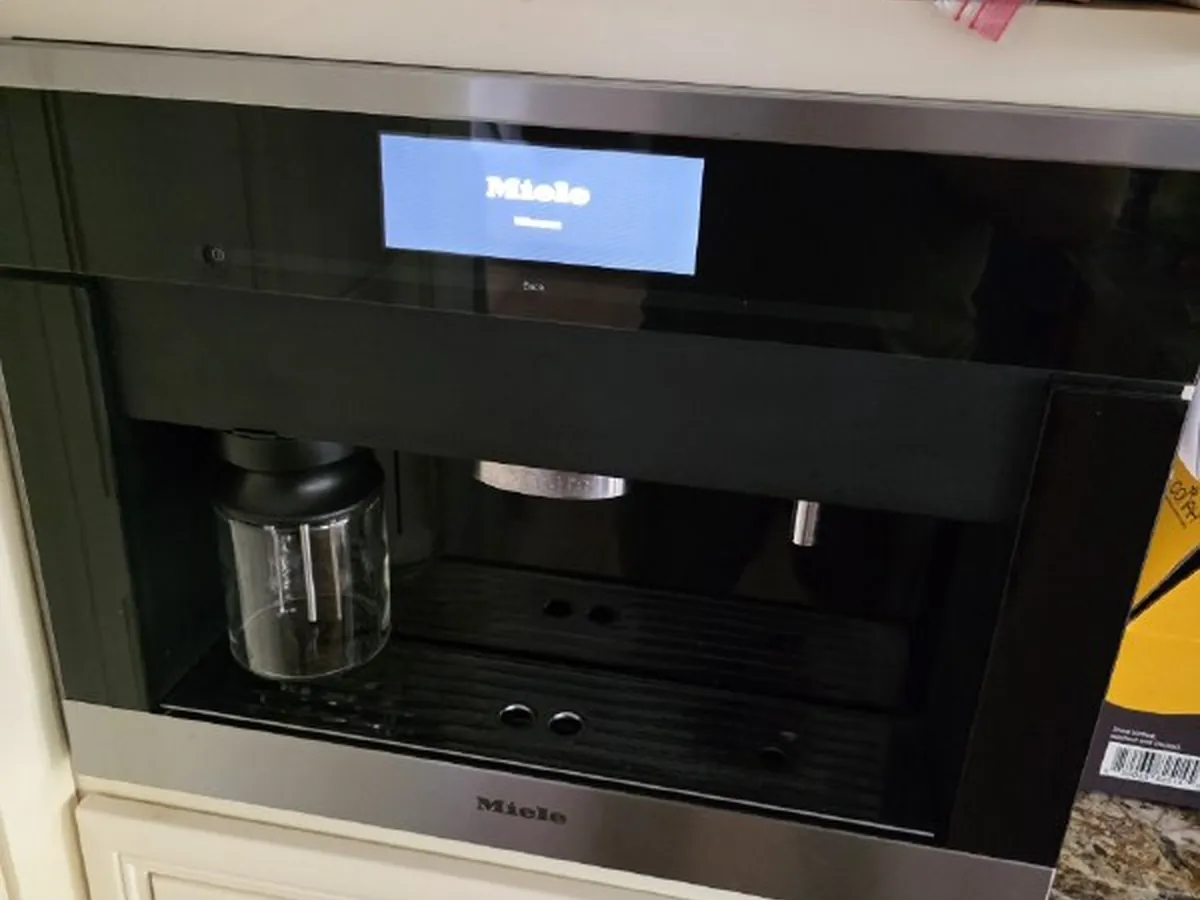
Built-in & plumbed machines
Cabinetry-integrated units on a plumbed water line, matched to the wall ovens beside them. They can't be carried to a bench, so the work happens in place.
- In-place brew group service
- Plumbed water line and valve repair
- Boiler and thermoblock descaling
- Trim panel removal and refit
Bean-to-cup superautomatics
The most mechanically complex coffee equipment in a home kitchen — grinder, brew group and milk system all in one cabinet.
- Grinder burr replacement and calibration
- Brew group strip, service and reseal
- Milk system and frother cleaning
- Drive gear and motor repair
Freestanding espresso machines
Countertop semi-automatic and automatic machines, including tank-fed units.
- Pump and pressure diagnosis
- Group head and shower screen service
- Seal and gasket replacement
- Thermostat and heating element repair
Common causes
Why it breaks down.
Bay Area water is hard, and these machines are water machines
Every shot heats mineral-laden water and pushes it through narrow passages. Scale is not a defect, it's chemistry, and it's the single biggest cause of coffee machine failure here.
Descaling gets skipped or done incompletely
The machine asks, the owner postpones, and by the time it's insistent the scale has built past what a consumer cycle can remove.
Brew group seals perish from heat cycling
The o-rings and gaskets in the brew group live between hot water and pressure. They harden and shrink over years, and then they leak.
Coffee oils go rancid inside the group and milk lines
Oil residue builds up wherever coffee and milk flow. It affects taste first, then blocks passages, then jams the mechanism.
Grinder burrs wear down gradually
Burrs dull over tens of thousands of shots. The grind coarsens, extraction weakens, and owners blame the beans long before they blame the grinder.
Stones and debris get into the bean hopper
Even good beans occasionally carry a small stone. It goes straight into the burrs, and it's a common cause of a suddenly dead grinder.
Care tips
Keep it running longer.
- Run the descale cycle when the machine asks, not laterThe prompt is calculated from the water actually put through it. Postponing is what turns a maintenance cycle into a service call.
- Use filtered water if the machine allows itIn a hard-water area this single change extends the machine's life more than anything else on this list.
- Clean the milk system after every sessionMilk residue in the lines goes off quickly and blocks the frother. Most machines have a rinse cycle — it takes under a minute.
- Remove and rinse the brew group weeklyOn machines with a removable group, a weekly rinse under warm water clears the oils that eventually jam the mechanism.
- Empty the grounds container regularlyA packed container backs residue up into the brew group and encourages mould in a warm, damp cabinet.
- Check the beans for debris before fillingA quick glance into the hopper costs nothing and prevents the most annoying grinder failure there is.
Pricing
Priced after diagnosis, not before.
Parts and labor for coffee machine repair vary too much by brand and fault to publish a flat rate honestly. A technician diagnoses the issue on site and gives you the exact price in writing — nothing starts until you approve it, and the diagnostic fee is applied to the repair.
Brands we service
Miele, Thermador, Gaggenau, Bosch, Jura, Wolf, JennAir, Siemens, Fisher & Paykel
Service area
Coffee machine repair across the Bay Area.
Same technicians, same warranty, same pricing rules, from San Francisco down to the South Bay and out to Marin. Pick your city for local response times and what we see most in your neighborhood.
Questions
Before you call.
My built-in coffee machine keeps asking to descale even after I descale it. Why?
Usually because the scale has built up beyond what a consumer descale cycle can shift, or the cycle was interrupted before finishing. At that point the boiler and flow path need servicing properly rather than another round of solution.
Do you service built-in Miele, Thermador and Gaggenau coffee machines?
Yes — built-in and plumbed coffee equipment is regular work for us, including cabinetry-integrated units that have to be serviced in place rather than removed.
Why does my coffee taste weak all of a sudden?
Two usual suspects: scale restricting flow and dropping brew pressure, or grinder burrs worn down enough that the grind has coarsened. Both are fixable and neither means a new machine.
Is a leaking coffee machine worth repairing?
Almost always, yes — particularly a built-in. Leaks are typically perished brew group seals or a split internal hose, and both are contained repairs against the cost of a cabinetry-matched replacement.
How often should a built-in coffee machine be professionally serviced?
Roughly annually in this area, given the water. That's a proper descale plus a brew group strip and reseal, and it's considerably cheaper than the repair it prevents.
How much does coffee machine repair cost?
It varies with the fault. A descale and brew group service is maintenance-level; a pump, grinder or control board is a larger job. We diagnose first and give you the number in writing before proceeding.
Book a technician
Get a same-day window.
- ☎(628) 285-0504Fastest way to reach a dispatcher
- ✉info@volteight.comEstimates, invoices, commercial contracts
- ⌚Mon–Fri 8am–10pm · Sat–Sun 8am–5pmEmergency calls answered after hours
- ⌖San Francisco Bay AreaMarin, San Francisco, East Bay, Peninsula, South Bay